




Insurance Brokers Code of Practice Review
Your Voice, Your Code
The Insurance Brokers Code of Practice sets out the standards and values that guide insurance brokers across Australia in serving their clients. It plays a central role in promoting trust professionalism and ethical conduct within the broking profession.
It is your Code. For it to work, it must reflect both the needs of the consumers you serve and the practical realities of
professional broking practice.
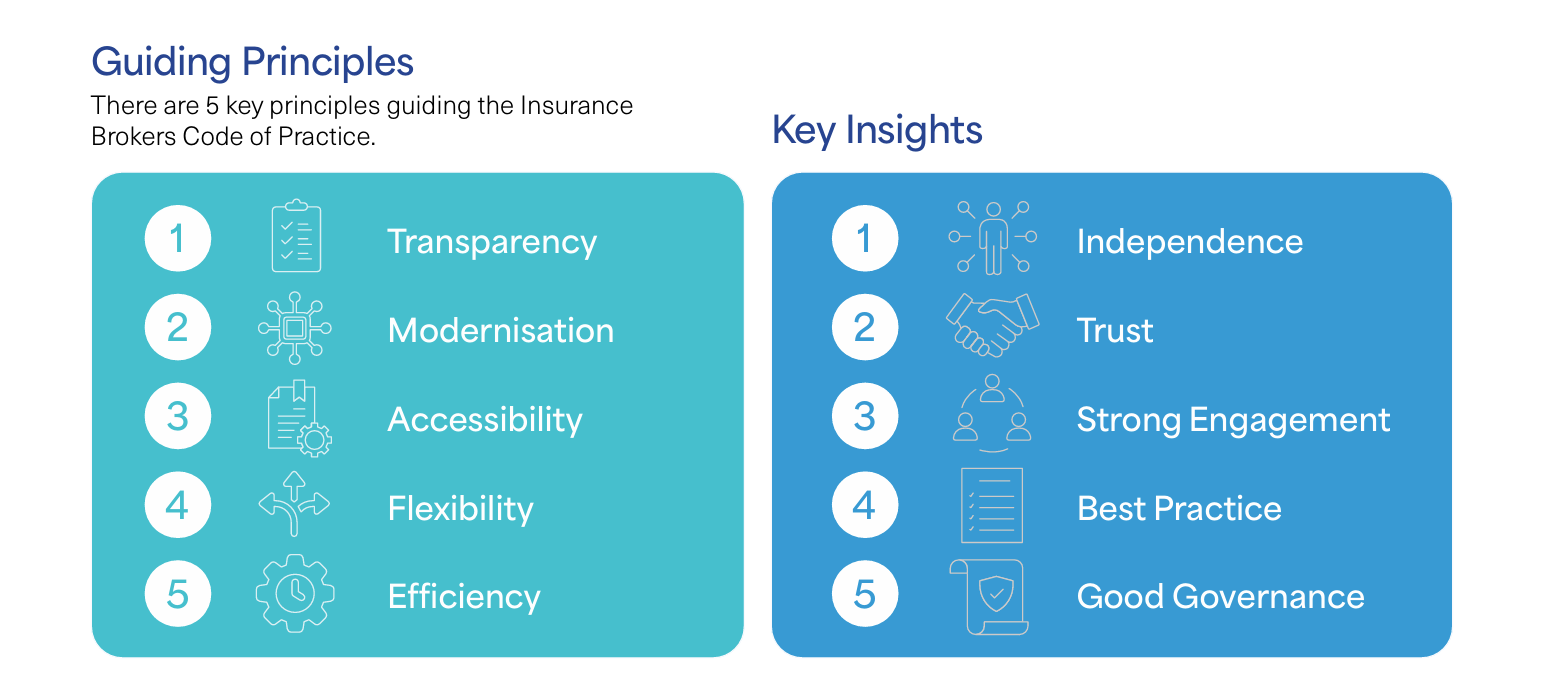
The Code review was a rigorous process that was guided by five key principles of transparency, modernisation, accessibility, flexibility and efficiency. The review began in late 2024 with the appointment of an independent reviewer and concluded with two rounds of public consultation in 2026.
It sought the voices and feedback of members, clients, consumer representatives, regulators and industry stakeholders, and each view was heard and considered.
Delivering a fit-for-purpose Code relies on robust collaboration. NIBA thanks everyone who made a submission or gave feedback.
You can read the 2027 Draft Code and other resources related to the Code Review process below.

Draft 2027 Code Resources
2027 Draft Code of Practice
Published July 2026


Consultation 2027 Draft Code
Published July 2026


Code Review Resources
Member Consultation Paper
Published February 2026

Stakeholder Consultation Paper
Published February 2026

Your Voice Your Code Creative Assets
Published February 2026

Your Voice Your Code Member Post Pack
Published February 2026

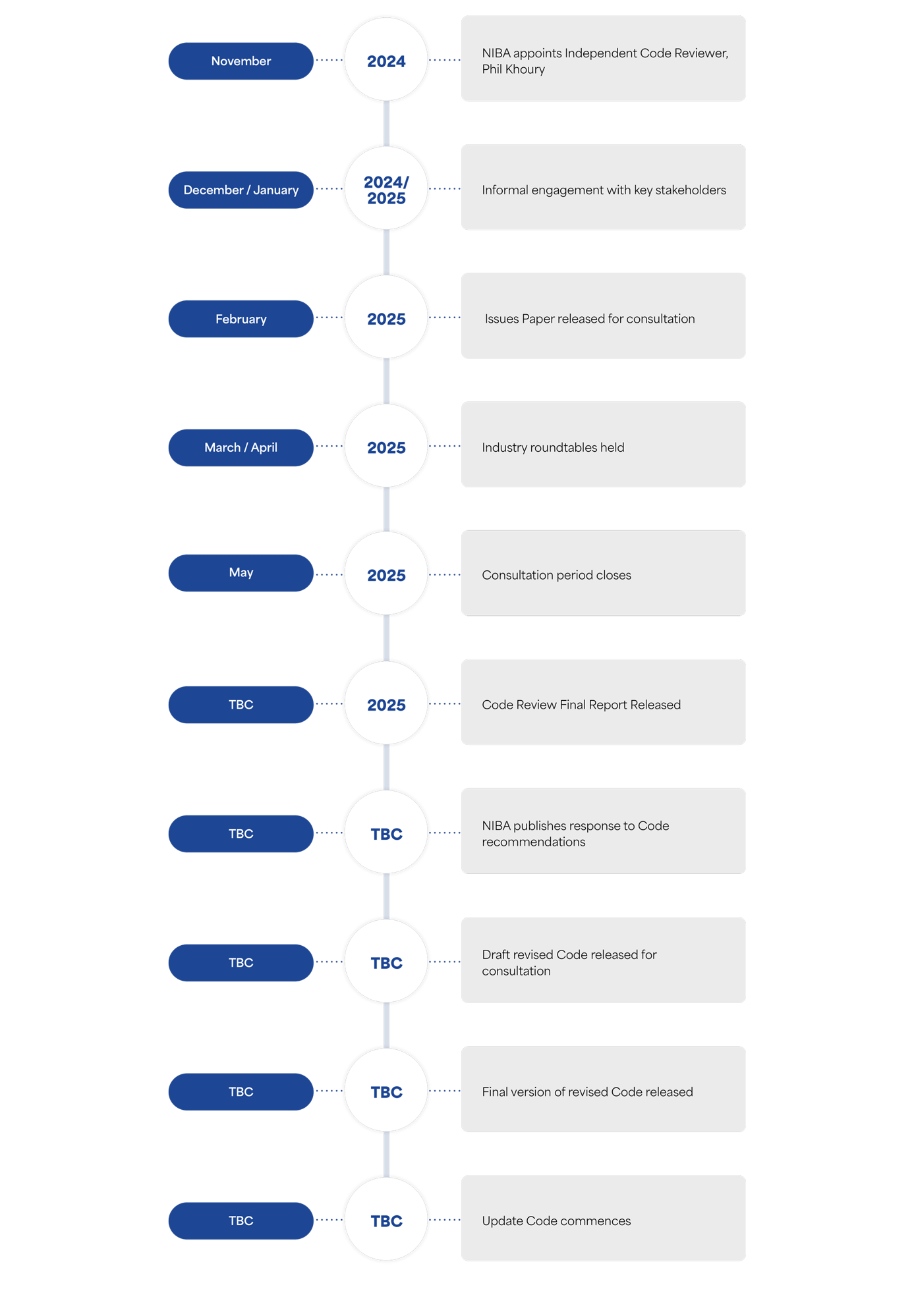
Code Review Timeline
2024/25
December / January
Preliminary engagement with key stakeholders
2025
February
2025
March/April
Wide industry consultation and roundtables held
2025
May/June
2025
August
Independent Reviewer shares draft recommendations report with NIBA
2025
September - November
NIBA considers draft report and responds to Independent Reviewer
2025
December
2026
January
2026
July
Draft revised Code released for consultation
2026
October
2027 Final Code released
2027
January
New Code commences
Stakeholder Consultation
Recognising that not all stakeholders have the resources, capacity or preference to prepare a written submission, the Code review process adopted a multi‑channel and inclusive approach to consultation. This ensured that a broad cross‑section of views could be heard and considered, regardless of organisational size or location.
Consultation included direct engagement with key external stakeholders such as the Insurance Brokers Code Compliance Committee (IBCCC), ASIC, AFCA, the Australian Small Business and Family Enterprise Ombudsman (ASBFEO), the Financial Rights Legal Centre and NSW Fair Trading. In addition, Code Subscribers and insurers participated in a series of online roundtables, bringing together representatives from across the broking profession and the wider insurance sector to examine specific issues in greater depth.
More than 40 individual organisations contributed to the review through various formal and informal channels. This multi‑layered approach enabled rich, candid discussion and ensured that voices from across the general insurance landscape, including large national firms, regional brokers, industry bodies and consumer representatives could meaningfully contribute to the conversation.
The breadth and depth of this engagement reflects the Review's commitment to ensuring the revised Code is grounded in real‑world practice, responds to stakeholder expectations and remains practical and effective for brokers and clients alike.