



What the Hormuz Crisis Means for Brokers and Their Clients
News
Insurance
From marine and agriculture to property, transport and aviation, Peter Beard, Manager, Technical Services, Insurance Advisernet highlights the fast-moving risks brokers need to address now to protect clients and reduce exposure.
The Situation
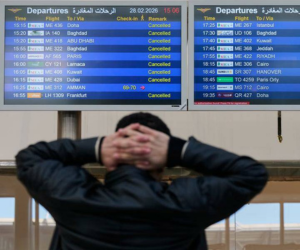
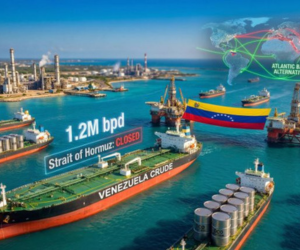
On 28 February 2026, US and Israeli forces struck Iran. In retaliation, Iran effectively closed the Strait of Hormuz — through which 20% of global oil and gas normally flows. Five weeks on, the strait remains near-zero for commercial traffic. Brent crude sits at ~US$104 (futures) against US$160 in physical Gulf markets. The IEA has confirmed this crisis exceeds both 1970s oil shocks combined.
As of 28 March, Houthi rebels have formally entered the war with missile strikes on Israel and have explicitly threatened closure of the Bab al-Mandeb — the only remaining functioning Gulf oil export corridor. Trump has set an April 6 deadline for Iran to reopen Hormuz. For your clients, this is not a distant geopolitical event. It is inside their businesses right now, in their diesel bills, freight costs, supply chains, and profitability.
|
⚠ IMMEDIATE RISKS TO CLIENTS |
✔ OPPORTUNITIES FOR YOUR PRACTICE |
|
|
Immediate Client Risk By Sector
MARINE & CARGO (CRITICAL) | Onset: IMMEDIATE — already active
Standard Institute Cargo Clauses exclude war and warlike operations. Gulf-origin or Gulf-transiting cargo may be uninsured today. War risk premiums have risen 3–5× and some markets have withdrawn entirely. Red Sea/Bab al-Mandeb war risk is now active following the Houthi escalation on 28 March. Review all open covers immediately. Contact specialist Lloyd’s markets now — capacity is tightening fast.
Key broker actions:
AGRICULTURE & RURAL (CRITICAL) | Onset: IMMEDIATE — diesel shortages reported in regional QLD, NSW, SA
Diesel shortages are active in regional QLD, NSW and SA. The federal government has authorised higher-sulphur fuel for 60 days — creating machinery breakdown risk under policies that exclude non-approved fuel grades. Farm asset reinstatement values are 15–30% below replacement cost due to inflation in diesel, steel and plastics. BI policies may not cover fuel supply disruption. Urea fertiliser prices are up 43% (US$475 → US$680/tonne).
Key broker actions:
PROPERTY & CONSTRUCTION (HIGH) | Onset: IMMEDIATE — construction cost inflation already embedded
Construction cost inflation is the dominant risk. Steel, plastics, petroleum-derived materials and labour are all more expensive. Sums insured set at 2024 valuations are now structurally inadequate. Strata schemes are almost universally underinsured. This represents the single highest-volume underinsurance exposure in your current book. Engage valuers immediately.
Key broker actions:
TRANSPORT & LOGISTICS (HIGH) | Onset: 1–3 weeks — cost pressures building
Fleet agreed values set pre-crisis do not reflect current replacement costs. Goods-in-transit sublimits set when freight rates were lower are being regularly exceeded as rates rise 30–40%. Most BI policies require physical damage to trigger — contingent BI or supply chain extensions may be needed.
Key broker actions:
AVIATION (VERY HIGH) | Onset: IMMEDIATE — Qantas, Rex already announcing surcharges
Jet fuel is 25–30% of airline operating costs. Regional operators face acute margin compression. Hull agreed values, passenger liability sublimits, and BI coverage for jet fuel price escalation all require immediate review.
Key broker actions:
MANUFACTURING & INDUSTRIALS (HIGH) | Onset: 2–6 weeks as input costs flow through
Petrochemical feedstocks and petroleum-derived building materials are significantly more expensive. Clients substituting raw materials due to supply constraints face product liability and product recall risk. Most standard BI policies require direct physical damage — not supply chain disruption — to trigger.
Key broker actions:
Risks to Your Own Practice
Professional indemnity exposure is your most critical immediate risk. The current environment constitutes a material change in the risk environment for a large number of clients across multiple sectors. GICOP requires proactive disclosure — silence is not a defence.
|
Risk to Your Practice |
Severity |
Key Action |
|
PI — Underinsurance |
CRITICAL |
Document every reinstatement value conversation and recommendation, including those the client declined. |
|
PI — Marine / War Risk Gap |
HIGH |
Confirm war risk position in writing for all marine clients. Negligent placement in current conditions creates PI exposure. |
|
PI — BI Coverage Mismatch |
HIGH |
Review and document BI trigger clause analysis. Advise clients in writing of limitations. |
|
E&O — Documentation |
HIGH |
Update file notes after every significant client contact. What you said, what the client decided, when. |
|
Revenue — Client Cancellations |
MEDIUM |
Proactive engagement and flexible payment arrangements reduce lapse risk in financially stressed sectors. |
What to Do This Week – Immediate Actions (0-7 Days)
- Triage your client book by sector. Identify all clients in: marine/cargo, agriculture, transport, aviation, and property. These are your highest-priority contact groups.
- Send a proactive briefing communication to all commercial clients explaining the crisis and its insurance implications. This positions you as a trusted adviser, not a reactive one.
- Review all marine/cargo open covers, annual policies, and certificates with Gulf, Middle East, Indian Ocean, or Red Sea exposure. Confirm war risk status on each. Contact specialist markets if war risk is excluded or insufficient.
- Contact all agricultural clients in QLD, NSW and SA. Discuss diesel supply, machinery fuel grade changes, and reinstatement values. Refer to the government’s ‘dirty fuel’ authority — some policies may not cover related machinery damage.
- Review your own professional indemnity position. Ensure your PI cover is current, limits are adequate given your book size, and appropriate run-off provisions are in place.
- Brief your team. Every AR, account manager, and support staff should understand the key issues so client conversations are consistent and well-informed.
Reminder
The current situation constitutes a material change in the risk environment for a large number of clients across multiple sectors. Our obligations require us to act in the best interests of clients and to provide advice that is accurate and complete — including proactively communicating material changes in the risk environment that may affect coverage adequacy, even where a client has not asked.
Failure could result in a professional indemnity exposure.
Diary This Date: 6 April 2026
Trump’s self-imposed April 6 deadline for Iran to reopen the Strait of Hormuz is the most significant binary decision point in the conflict’s trajectory. Failure to comply will likely trigger either a US ground operation (Kharg Island or Qeshm Island seizure) or further escalation. Market prices this as a critical binary event. Brief all clients on potential market movement in advance.
Disclaimer
This summary briefing is intended for licensed insurance brokers and authorised representatives. It does not constitute financial product advice. Brokers should apply their own professional judgment and comply with their AFSL obligations when advising clients.
This summary briefing is prepared by Agentic AI Insurance Services for professional education and situational awareness purposes directed at licensed insurance brokers and authorised representatives. It does not constitute financial product advice, legal advice, or a recommendation to place, cancel, or alter any insurance policy. The analysis reflects publicly available information current as at 28 March 2026. The geopolitical situation is evolving rapidly and this paper may become outdated within hours of publication. Brokers are reminded of their obligations under the Corporations Act 2001, the Insurance Contracts Act 1984, the General Insurance Code of Practice, ASIC’s Regulatory Guidance (including RG 175 and RG 38), and their AFSL conditions when advising clients. All client-specific advice must be grounded in the individual circumstances of each client.